

France vs Austria vs Italy: prices, après-ski and which one fits your group
France, Austria or Italy for your group ski or snowboard trip? Compare 2026/27 lift pass prices, ski areas, food and après-ski, and find the right fit.
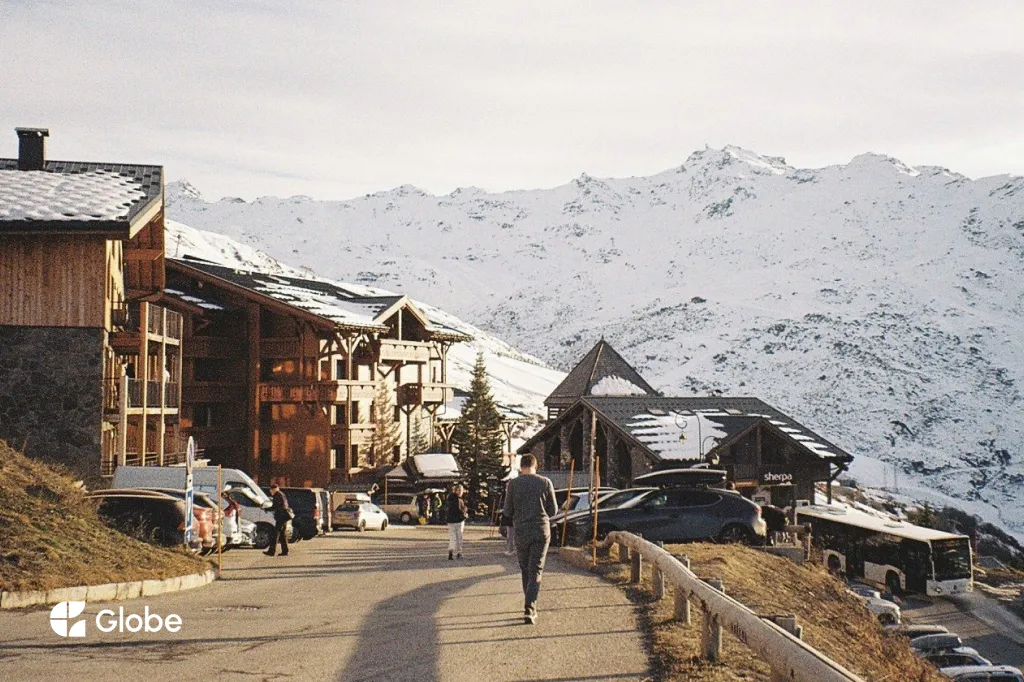
Planning a ski or snowboard trip to Europe? France, Austria and Italy are the three most visited ski countries in Europe, so they're usually where the decision starts.
Coming from Asia, I used to think skiing every year was a luxury, until I moved to Belgium. Here, our group of friends plan a ski trip every winter, and somehow they always find a way to make it fit what everyone wants. Some years it was a low-cost trip (Serre Chevalier, France), some years a bit of luxury and wellness (Serfaus-Fiss-Ladis, Austria), and some years it was all about après-ski (Val Thorens, France). I've been to France multiple times now, and this winter I'm heading to Austria.
It's still not cheap (here's how to make a group ski trip in Europe cheaper), but over the years they've learned that where you go shapes the whole trip. Usually, the bigger difference is between resorts, not countries. A smaller French resort can cost less than a famous Italian one, and a quiet Austrian village feels nothing like Ischgl on a Saturday night.
“Pick the country for the atmosphere, then pick the resort for the price.
Here's how the three compare on what matters most to a group of skiers and snowboarders: prices, ski areas, food and après-ski.
France vs Austria vs Italy at a glance
| France | Austria | Italy | |
|---|---|---|---|
| 6-day lift pass (2026/27) | €307 to €468 | €368 to €478.50 | €320 to €453 |
| Overall cost | Wide range, budget to premium | Mid to high | Often good value |
| Ski areas | Biggest linked areas, high-altitude resorts | Smaller areas, very modern lifts | Large Dolomites pass across many separate areas |
| Food | Varies a lot by resort | Hearty and traditional | Strong food culture, fair prices |
| Après-ski | Lively in some resorts, quiet in others | The liveliest | Calm, built around food |
| Best for | Mixed levels, long ski days | Groups who want après-ski | Food lovers, value seekers |
| Main downside | Famous resorts are pricey and busy in February | Lower altitude, so snow can be less reliable | Areas are spread out, and lower villages rely on snowmaking |
✦Lift pass prices are official 2026/27 ticket-office prices for a 6-day adult pass, collected by Snowplaza. Booking online can be cheaper.
Skiing in France
Prices
France has the widest price range of the three. For 2026/27, a 6-day pass costs €307.20 in Les Sybelles and €336.50 in Alpe d'Huez, but €421 in Les Trois Vallées and €468 in Tignes-Val d'Isère. Accommodation and food follow a similar pattern: the famous names cost more, and smaller resorts can be good value.
Skiing
France is home to some of the largest linked ski areas in the world. Les Trois Vallées alone has around 600 km of runs (InTheSnow). Many French resorts are also high up, which helps with snow. A lot of them were purpose-built for skiing, so ski-in/ski-out apartments are common.
Food and après-ski
Food quality and prices vary a lot by resort. Après-ski is varied too: Val d'Isère and Val Thorens are known for lively evenings, while other resorts are much quieter.
Best for: groups with mixed skiing levels who want big ski days and reliable snow. There's enough terrain for everyone, and you can meet up for lunch.
Skiing in Austria
Prices
Austria's big ski areas sit at the higher end. For 2026/27, a 6-day pass costs €368 in Obertauern, €399 in the Zillertal, €423 in Kitzbühel, €468 in Ski Arlberg (St Anton) and €478.50 in Sölden. The Post Office Ski Resort Report also lists Austria, together with Switzerland, among the most expensive countries for a ski week.
Skiing
Austrian ski areas are generally smaller than the French giants but well maintained. Austria is also known for some of the most modern lifts in the Alps, which snowboarders will appreciate: gondolas and chairlifts are much easier on a board than drag lifts. Many resorts are traditional villages rather than purpose-built stations, which gives them a lot of charm. The trade-off is altitude: base elevations are often lower, so snow can be more sensitive to warm spells.
Food and après-ski
Expect hearty mountain food, like gröstl, a potato, bacon and onion hash. Après-ski is where Austria stands out. Five of WeSki's top 10 après-ski resorts are Austrian: St Anton, Ischgl, Saalbach, Mayrhofen and Lech (WeSki).
Best for: groups who want après-ski as much as skiing, and like a cosy village atmosphere.
Skiing in Italy
Prices
Italy often offers good value. In the Post Office Ski Resort Report 2026, six of the ten best-value resorts for adults were Italian. For 2026/27, a 6-day pass costs €320 at Schnalstaler Gletscher, €342 in Bormio and €374.50 in Livigno. The Dolomiti Superski pass is €453, but it covers a huge area.
Skiing
Italy is more about the setting than size, especially in the Dolomites. The Dolomiti Superski pass covers around 1,200 km of runs, including the Sella Ronda, but they're spread over 12 ski areas, so you'll rarely ski all of it from one base.
Many Italian villages also sit lower than France's high resorts. Cortina's base, for example, is at 1,224 m (Snow-Online). That's why resorts rely on snowmaking: almost all Dolomiti Superski runs are covered. Resorts like Cervinia and Livigno sit higher.
Food and après-ski
Italy has a strong food culture, and mountain food is generally good quality at reasonable prices. Après-ski is calmer and built around long lunches, good wine and dinner.
Best for: groups who care about food and scenery, and want good value without giving up on the skiing.
Globe
Put France, Austria and Italy to a group vote instead of a 300-message debate.
How to choose as a group
Start with what your group wants most from the trip: après-ski, food, big ski days or the lowest price. That answer usually points to a country:
- Mostly après-ski? Austria.
- Mostly wellness? Austria.
- Mostly food and scenery? Italy.
- Mixed levels and lots of skiing? France.
- Mostly price? Italy, or a smaller resort in France.
Then compare two or three resorts within that country, because that's where the real price differences are. For more ways to save, here's how to make a group ski trip in Europe cheaper.
Deciding together
Comparing countries is the easy part. Getting eight friends to agree on one is harder.
With Globe, anyone in the group can add a country or resort as a Proposal, and everyone votes. Once the vote has a winner, you can add it straight to your Planner, and costs can be tracked in Expenses from the first deposit.
As for us, this winter we picked Austria. We wanted more modern lifts, and food and drinks that cost less than in the big French resorts. And after five winters in a row in France, it was time for a change of scenery.
Globe
Vote on the resort, share the plan and split the costs.
FAQ
Which is cheapest for skiing: France, Austria or Italy?
Italy often offers good value. Austria's big resorts tend to be at the higher end, and in France it depends a lot on the resort.
Which country has the best après-ski?
Austria is best known for lively après-ski, with resorts like St Anton, Ischgl, Saalbach and Mayrhofen. In France, Val d'Isère and Val Thorens are popular for it. Italian après-ski is calmer and more about food.
Which country is best for a group with mixed skiing levels?
France is often a good fit, because its large linked ski areas have runs for every level in one place, whether people ski or snowboard.
Are lift passes cheaper in Italy than in Austria?
Often, yes, when you compare similar ski areas. For 2026/27, a 6-day Dolomiti Superski pass costs €453 for around 1,200 km of runs, against €468 in Ski Arlberg. Bormio costs €342, against €399 in the Zillertal.
Globe
Plan your next trip with Globe!
Group trips are complicated enough. The planning shouldn't be.
Get Started